

8. THE CITIES OF DANTE
Verona, Mantua, Bologna and Ravenna
06 days / 05 nights
 Verona, Piazza delle Erbe |  Verona, Piazza delle Erbe |  Piazza dei Signori, Verona |
|---|---|---|
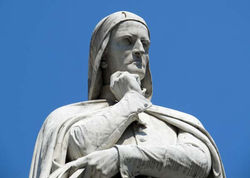 Dante, Piazza dei Signori, Verona |  Arena, Verona |  Arena, Verona |
 Verona, Giulietta's House |  Verona, Biblioteca Capitolare |  Mantua |
 Castle of Mantua |  Mantua, Palazzo Te |  Le due Torri, Bologna |
 I portici di Bologna |  Palazzo Poggi, Bologna |  I canali di Bologna |
 Fontana del Nettuno, Bologna |  Palazzo D'Accursio, Bologna |  Ravenna, Sant'Apollinare in Classe |
 Mausoleum of Galla Placidia, Ravenna |  The church of San Vitale, Ravenna |  The church of San Vitale |
 Sant'Apollinare Nuovo, mosaics, Ra |  The Church of San Francesco, Ravenna |  The tomb of Dante |
Travel plan:
1st Day – VERONA
Arrival to the hotel, dinner and overnight.
2nd Day – VERONA
Visit of Verona, the city where Dante lived for several years and where he wrote much of Paradise. We will see the Chapter Library, the Arena, the Church of S. Fermo, the Lion Gate, the House of Juliet (the Montagues and Capulets are cited in Purgatory), the Montague district, the Palace of Cangrande, the Torre dei Lamberti , the Piazza dei Signori, Piazza delle Erbe, Piazza Bra Molinari and San Zeno. Free lunch. Dinner and overnight.
3rd Day – VERONA / MANTUA
Visit of Mantua, the city where Virgil was born, the guide that Dante chose to undertake the exploration of the first two unearthly worlds. Visit to Piazza delle Erbe with the Palazzo della Ragione and the Palazzo del Podesta, Broletto Piazza, Piazza Sordello with the House of Rigoletto, the Castle of St. George with the famous Camera degli Sposi with frescoes by Mantegna and the Ducal Palace. Free lunch. In the afternoon visit to Palazzo Te, the masterpiece of Giulio Romano. The visit includes the Courtyard of Honour, the Sala dei Cavalli, the rooms of Cupid and Psyche, the Winds, the Eagles, the grand room of the Plasters and the Chamber of the Giants, the largest and best known of Palazzo Te. Dinner and overnight.
4th Day – MANTOVA / BOLOGNA
Departure for Bologna. Full day guided tour of the city with its 40 km of arcades, Piazza Maggiore, and the great unfinished Basilica of San Petronio, the City Palace and the apartment of the papal legates. the Palazzo del Podesta, one of Notaries and the sixteenth Fountain of Neptune, the work of Giambologna. Free lunch. The two famous pendants Towers, of Asinelli and Garisenda, the only remaining of the numerous medieval noble towers. St. Stephen's Basilica, a set of sacred buildings that make up the most well-known complex of the Seven Churches, Dinner and overnight.
5th Day – BOLOGNA / RAVENNA
Departure to Ravenna, the city where Dante, finding asylum at the court of Guido Novello da Polenta spent the last years of his life. Free lunch. Visit of Galla Placidia, the Basilica of San Vitale, Sant'Apollinare Nuovo and Sant'Apollinare in Classe, the Palace of the Da Polenta and the home of Francesca. Dinner and overnight.
6th Day – RAVENNA
In the morning visit to the Tomb of Dante, to Quadrarco of Braccioforte where in 1865 were found the remains of Dante and the Basilica of St. Francis where he held his funeral. According to the departure time, free time for shopping.
Price per person starting from € 535,00
Prices per person based on groups of 25 participants on half-board basis and cost guides included.
Transportation, entrance fees to places visited, drink excluded.
Tours will be made with a minimum of 08 participants
For information:
info@leterredidante.it
Lo primo tuo refugio e ‘l primo ostello
sarà la cortesia del gran Lombardo
che ‘n su la scala porta il santo uccello;
ch’in te avrà sì benigno riguardo,
che del fare e del chieder, tra voi due,
fia primo quel che tra li altri è più tardo.
Con lui vedrai colui che ‘mpresso fue,
nascendo, sì da questa stella forte,
che notabili fier l’opere sue.
(Pd., canto XVII)
Quindi passando la vergine cruda
vide terra, nel mezzo del pantano,
sanza coltura e d’abitanti nuda.
Lì, per fuggire ogne consorzio umano,
ristette con suoi servi a far sue arti,
e visse, e vi lasciò suo corpo vano.
Li uomini poi che ’ntorno erano sparti
s’accolsero a quel loco, ch’era forte
per lo pantan ch’avea da tutte parti.
Fer la città sovra quell’ossa morte;
e per colei che ’l loco prima elesse,
Mantua l’appellar sanz’altra sorte.
(If., canto XX)
Non mi poriano già mai fare ammenda
el lor gran fallo gli occhi miei, sed elli
non s’accecasser, poi la Garisenda
torre miraro co’ risguardi belli,
e non conobber quella (mal lor prenda)
ch’è la maggior de la qual si favelli [...]
(Le Rime)
Qual pare a riguardar la Carisenda
sotto ’l chinato, quando un nuvol vada
sovr’essa sì, ched ella incontro penda;
tal parve Anteo a me che stava a bada
di vederlo chinare, e fu tal ora
ch’i’ avrei voluto ir per altra strada.
(If., canto XXXI)